
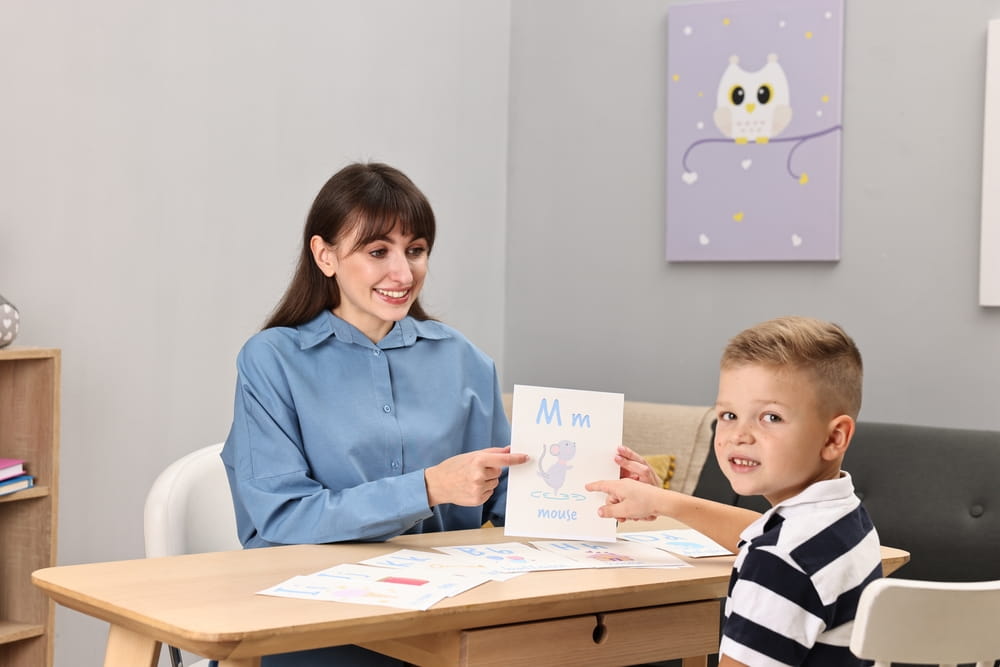

At Solstice Behavioral Health & Consulting in Shelton, CT, families throughout New Haven County often seek practical strategies to support their child’s communication at home. Augmentative and Alternative Communication (AAC) includes tools and strategies that help individuals express themselves when spoken language is limited or developing. AAC may involve picture exchange systems, communication boards, speech-generating devices, sign language, or communication apps on tablets. For many children, especially those with autism or other developmental differences, AAC provides a bridge to meaningful interaction.
AAC does not prevent speech development; in fact, research consistently shows that it can support and enhance verbal communication. By giving children a reliable way to express needs, thoughts, and feelings, AAC reduces frustration and increases confidence. When used consistently at home, AAC becomes part of daily life rather than a therapy-only tool, helping children generalize communication skills across settings and with different communication partners.
Creating a Communication-Rich Environment
Using AAC effectively at home begins with creating an environment where communication is expected, supported, and encouraged. This means keeping AAC tools accessible at all times rather than stored away. A communication device should travel with the child from room to room, just as a voice would. Visual supports, such as labeled bins or picture schedules, can also reinforce understanding and predictability throughout the day.
Modeling is one of the most powerful ways to teach AAC use. Caregivers can model by using the child’s AAC system while speaking. For example, during snack time, a parent might say, “Do you want more?” while pressing the symbols for “want” and “more” on the device. This process, often called aided language stimulation, shows the child how to combine symbols and communicate effectively. Repetition across daily routines—mealtime, bath time, playtime, and bedtime—builds familiarity and comfort with the system.
Making AAC Part of Daily Routines
Children learn best through repetition in meaningful contexts. Embedding AAC into everyday routines provides natural opportunities for communication practice. Rather than creating separate “AAC practice sessions,” families can integrate communication into activities already happening at home.
Consider incorporating AAC in the following ways:
- During meals, encourage requests for food items, drinks, or “all done.”
- At playtime, model words like “go,” “stop,” “help,” or favorite toy names.
- During transitions, use AAC to preview what comes next, such as “bath,” “pajamas,” or “bed.”
- While reading books, pause to let the child comment or label pictures using their system.
It is important to allow wait time after modeling or asking a question. Many children who use AAC need extra processing time to respond. Patience and positive reinforcement help build confidence and motivation. Even small attempts at communication—touching a symbol, looking toward the device, or approximating a sign—should be acknowledged and celebrated.
Supporting Consistency Across Settings
Consistency between home, school, and therapy settings strengthens AAC effectiveness. When families collaborate with professionals involved in services such as Autism Diagnostic Evaluations, Parent Training, or Social Skills Group Therapy, communication goals can align across environments. If a child participates in programs like Solstice Academy or other center-based services, sharing vocabulary lists or core word targets ensures that everyone is modeling the same language.
For families who access Telehealth Services or School Consultation, virtual collaboration can also support AAC use at home. Regular communication with therapists allows caregivers to troubleshoot challenges, update vocabulary as skills grow, and adjust strategies as needed. AAC systems should evolve with the child, reflecting new interests, academic demands, and social opportunities.
Encouraging Independence and Emotional Expression
AAC is not just about requesting items; it is about developing a full range of communication. Encouraging children to use AAC for commenting, asking questions, expressing emotions, and participating in social interactions broadens their world. Caregivers can intentionally model emotion words like “happy,” “mad,” “tired,” or “excited,” especially during real-life situations. This helps children learn that communication is a tool for connection, not only for meeting basic needs.
At Solstice Behavioral Health & Consulting in Shelton, CT, families across Milford, Trumbull, Stratford, Fairfield, Easton, Monroe, Derby, Ansonia, Seymour, Weston, Westport, and Wilton are encouraged to view AAC as an empowering resource. When consistently supported at home, AAC can reduce frustration, strengthen relationships, and promote greater independence. With patience, modeling, and collaboration, families can create a communication-rich home environment where every child has a voice.
Sources
American Speech-Language-Hearing Association. (n.d.). Augmentative and Alternative Communication (AAC). ASHA Practice Portal.
Romski, M., & Sevcik, R. A. (2005). Augmentative Communication and Early Intervention: Myths and Realities. Infants & Young Children.
Millar, D. C., Light, J. C., & Schlosser, R. W. (2006). The Impact of Augmentative and Alternative Communication Intervention on the Speech Production of Individuals with Developmental Disabilities. Journal of Speech, Language, and Hearing Research.