

Many children with autism benefit from engaging in sensory-friendly activities that help them learn, explore, and feel regulated throughout the day. Sensory play isn’t just fun, it supports communication, self-regulation, motor skills, and independence. It can also create meaningful bonding moments between parents and children, offering opportunities to learn through play in comfortable and familiar environments.
At Solstice Behavioral Health & Consulting, we help families throughout Shelton, CT and the surrounding New Haven County communities, including Milford, Trumbull, Stratford, Fairfield, Easton, Monroe, Derby, Ansonia, Seymour, Weston, Westport, and Wilton. Together, we can integrate sensory-friendly activities into home routines. Through ABA therapy, parent training, social skills groups, Solstice Academy, and individualized family support, our team of Master’s and Doctoral-level clinicians teaches families how to use play-based strategies to promote learning and engagement.
Whether your goal is improving communication, building independence, or helping your child feel calm and confident, these sensory-friendly activities are simple, effective, and easy to do at home.
Why Sensory-Friendly Activities Are Important
Children with autism often interact with the world differently. Sensory-friendly activities allow children to explore textures, movement, sounds, and visual input in ways that feel safe and enjoyable. These activities can help:
- Reduce stress and frustration
- Encourage communication and social interaction
- Build fine and gross motor skills
- Support emotional regulation
- Improve focus and attention
- Increase tolerance for new experiences
- Strengthen parent-child bonding
Sensory activities are also frequently used within Applied Behavior Analysis (ABA) therapy and Natural Environment Teaching (NET) because they create meaningful opportunities for teaching communication, labeling, turn-taking, and problem-solving skills.
1. Calm Down Bottles
Calm-down bottles (also known as glitter jars) are a visually soothing activity that helps children relax when they feel overwhelmed.
How to Make One:
- Fill a plastic bottle with warm water
- Add glitter glue or fine glitter
- Secure the lid tightly
Children can shake the bottle, then watch the glitter slowly fall. This quiet visual motion encourages deep breathing and promotes calmness. Parents can use this during transitions, bedtime routines, or after stimulating activities.
2. Homemade Playdough or Kinetic Sand
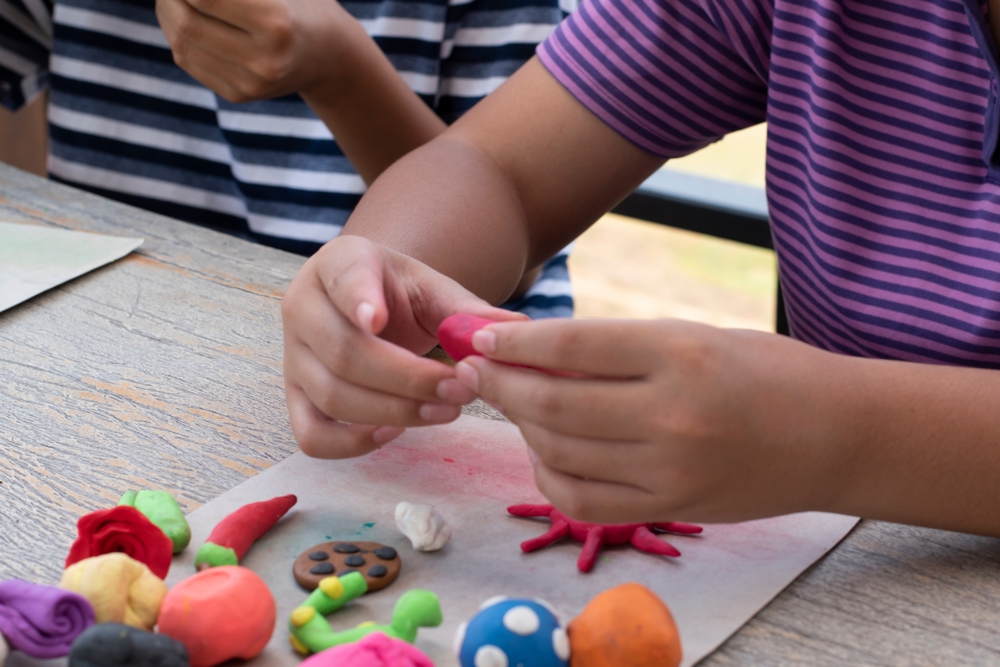
Playdough and kinetic sand offer rich tactile input that keeps hands busy while encouraging creativity and fine motor practice.
Ideas for Play:
- Roll and shape letters or numbers
- Hide beads or small toys for your child to find
- Practice cutting with plastic tools
These activities are ideal for strengthening hand muscles, improving coordination, and supporting pre-writing skills. They also create opportunities for communication: requesting colors, asking for help, or naming objects. This is often encouraged in ABA sessions.
3. Water Play
Water play is simple, calming, and endlessly adaptable. You can use a sink, bathtub, plastic bin, or outdoor table.
Try Activities Like:
- Pouring water between cups
- Floating and sinking experiments
- Water coloring with droppers
- Washing toy animals or cars
Water play naturally allows for imitation, turn-taking, and labeling actions such as “pour,” “splash,” “sink,” and “float.” This type of sensory activity works wonderfully for both play and functional skill development.
4. Light Play with Flashlights or Projections
For many children, gentle visual input can be both engaging and soothing. Flashlights, star projectors, or shadow puppets offer low-stimulation visual exploration.
Ideas Include:
- Making shapes or animals on the wall
- Finding objects in a dark room
- Pointing to different colors of light
This type of activity can help children practice joint attention: an important social skill often taught in ABA therapy.
5. Movement Activities for Indoor Play
Movement-based activities help children regulate their energy and feel grounded in their bodies. These can be adapted to different home environments.
Try:
- Indoor obstacle courses
- Yoga poses or stretching routines
- Jumping on a mini trampoline
- Dancing to favorite songs
- Scooter board games
Movement activities support motor planning, coordination, and self-regulation. They also help children practice following directions, staying in sequence, and engaging in cooperative play.
6. Sensory Bins
Sensory bins are simple, customizable, and can be recreated with materials around the house. Use a large container and fill it with items that match your child’s preferences.
Sensory bin ideas:
- Dry rice or beans
- Pom-poms
- Soft fabrics
- Bottle caps
- Foam shapes
- Cotton balls
Hide small toys, letters, or items your child can sort by color or shape. Sensory bins promote hands-on exploration, communication, and problem-solving, all commonly targeted skills in ABA therapy.
7. Music and Rhythm Activities
Music is a powerful way to support communication and emotional regulation. Singing, dancing, and rhythm play promote expressive language and imitation.
Try:
- Using simple instruments like drums, shakers, or xylophones
- Singing songs with motions (like “Wheels on the Bus”)
- Clapping rhythms for your child to copy
These activities help strengthen auditory processing, motor coordination, and social engagement.
8. Bubble Play
Bubbles are a favorite for encouraging communication and imitation. Children can practice saying words like “more,” “pop,” or “big bubble” or use gestures or AAC devices to request turns.
Bubble play is also great for:
- Eye contact
- Following simple directions
- Taking turns
- Building joint attention
Bubble activities are commonly used in ABA sessions because they are highly motivating and reinforce social interaction.
How Parent Training Helps Families Use Sensory Play at Home
At Solstice, our Parent Training Program teaches caregivers how to embed sensory-friendly activities into daily routines to support learning and regulation. Parents learn:
- How to follow their child’s lead during play
- When to use sensory activities for calming or engagement
- How to combine sensory play with communication goals
- How to use reinforcement to encourage participation
- How to adapt activities to meet developmental needs
When families understand how to use sensory play effectively, children experience more success at home, at school, and in the community.
Conclusion
Sensory-friendly activities can help children with autism feel calm, engaged, and ready to learn. Whether your child enjoys water play, movement, tactile exploration, visual activities, or music, these simple, at-home strategies support communication, independence, and emotional regulation.
At Solstice Behavioral Health & Consulting, located in Shelton, CT, we proudly serve families throughout New Haven County, including Milford, Trumbull, Stratford, Fairfield, Easton, Monroe, Derby, Ansonia, Seymour, Weston, Westport, and Wilton. Our specialized ABA therapy programs, sensory-informed strategies, parent training, and therapeutic play approaches help children develop meaningful and lasting skills.
To learn more or enroll in services, call (203) 900-4720.