
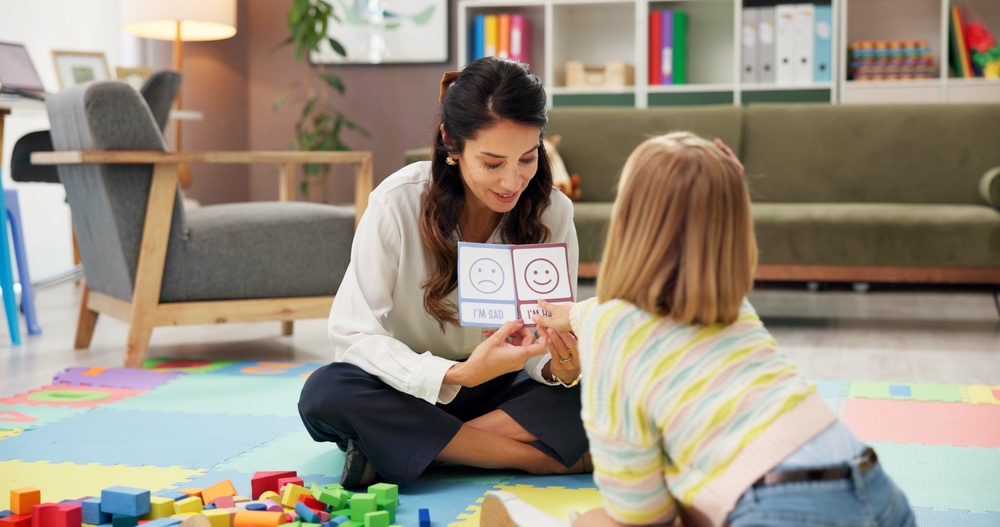

Communication is one of the most important skills children develop, yet it can be especially challenging for children with autism. Many children on the spectrum struggle with speech, language, or social communication, which can create frustration and limit opportunities for connection. Fortunately, research-based strategies such as visual supports have been shown to make a big difference. These tools provide a clear, consistent way for children to understand and express themselves, giving them the structure and predictability they often need to thrive.
At Solstice Behavioral Health & Consulting, we use visual supports across many of our autism services in New Haven County, including Milford, Shelton, Trumbull, Stratford, Fairfield, Easton, Monroe, Derby, Ansonia, Seymour, Weston, Wilton, and Westport. Whether through home-based ABA therapy, center-based services, or school consultations, visual systems are an essential part of how we help children with autism learn, grow, and communicate more effectively.
What Are Visual Supports?
Visual supports are tools that use pictures, symbols, written words, or objects to communicate information. These tools provide children with a way to understand daily routines, follow instructions, and express their needs without relying solely on spoken language. They can include:
- Communication boards or speech-generating devices
- Visual schedules (daily routines shown in picture or text form)
- Social stories with illustrations to explain new situations
- Visual cues such as stop signs, arrows, or timers
These supports are especially useful because they are concrete, easy to process, and consistent—qualities that benefit children who may find spoken language unpredictable or overwhelming.
Why Visual Supports Work for Children with Autism
Many children with autism are strong visual learners, meaning they understand and retain information better when it is presented visually. Visual supports take advantage of this strength while also reducing the stress that comes with trying to process fast-moving spoken language.
Here are some of the main benefits:
1. Improved Understanding – Visuals simplify complex directions, making it easier for children to grasp what is expected of them.
2. Reduced Frustration – When children have a clear way to communicate their needs, tantrums and meltdowns often decrease.
3. Consistency and Predictability – Visual supports make routines and expectations clear, helping children feel more secure.
4. Encouraged Independence – Children can refer back to a visual schedule or chart without constant reminders from adults.
5. Enhanced Social Skills – Tools like social stories help children learn how to interact with peers in different situations.
Types of Visual Supports in ABA Therapy
At Solstice, we integrate visual supports into our Applied Behavior Analysis (ABA) therapy programs, tailoring them to each child’s needs. Some common strategies include:
- Discrete Trial Training (DTT): Using picture cards to break down complex skills into smaller steps.
- Natural Environment Teaching (NET): Incorporating visuals into play and daily routines to promote generalization.
- Functional Communication Training (FCT): Teaching children to use visual symbols or PECS to replace challenging behaviors with communication.
- Visual Stories and Scripts: Helping children prepare for transitions such as starting kindergarten or visiting the doctor.
These supports are flexible and can be introduced in center-based therapy, at home, or during school consultations to ensure consistency across environments.
How Parents Can Use Visual Supports at Home
Parents play a huge role in reinforcing communication skills, and visual supports can be easily introduced at home. Here are some practical strategies:
- Create a Visual Schedule: Use pictures or drawings to show daily activities, such as getting dressed, brushing teeth, and bedtime.
- Use Labels: Place picture labels on toy bins, cupboards, and drawers to help your child find and put away items independently.
- Implement a Choice Board: Give your child simple options (snack choices, activities) using pictures to encourage decision-making.
- Practice with Social Stories: Read short illustrated stories together that explain routines like sharing toys or greeting others.
- Incorporate Visual Timers: Show how much time is left for play, homework, or meals to ease transitions.
By making these tools part of everyday routines, parents can strengthen their child’s communication skills while fostering independence.
The Role of Social Skills Groups and School Support
Beyond individual therapy, Solstice offers Social Skills Group Therapy and School Consultation Services that also incorporate visual supports. In groups, children practice communication and play skills with peers using tools such as social stories, visual prompts, and turn-taking boards. In schools, our specialists collaborate with teachers to develop visual classroom strategies—from individualized desk schedules to visual rules posted around the room. These supports ensure that children have the tools they need to succeed socially and academically.
Building Communication Confidence
Visual supports don’t replace spoken language; instead, they create a bridge to communication and learning. For many children, these tools open the door to speech development, increased confidence, and stronger connections with family, friends, and peers. Parents often notice that as their child becomes more comfortable using visuals, their overall stress decreases, and family interactions become smoother and more joyful.
Conclusion
Visual supports are powerful tools that help children with autism communicate, learn, and thrive. At Solstice Behavioral Health & Consulting, we are committed to providing individualized autism and ABA therapy services that make a meaningful difference in children’s lives across New Haven County, including Milford, Shelton, Trumbull, Stratford, Fairfield, Easton, Monroe, Derby, Ansonia, Seymour, Weston, Wilton, and Westport. If you’re interested in learning how visual supports can help your child, reach out to us at (203) 900-4720 to schedule a consultation. Together, we can build the skills and confidence your child needs to succeed.